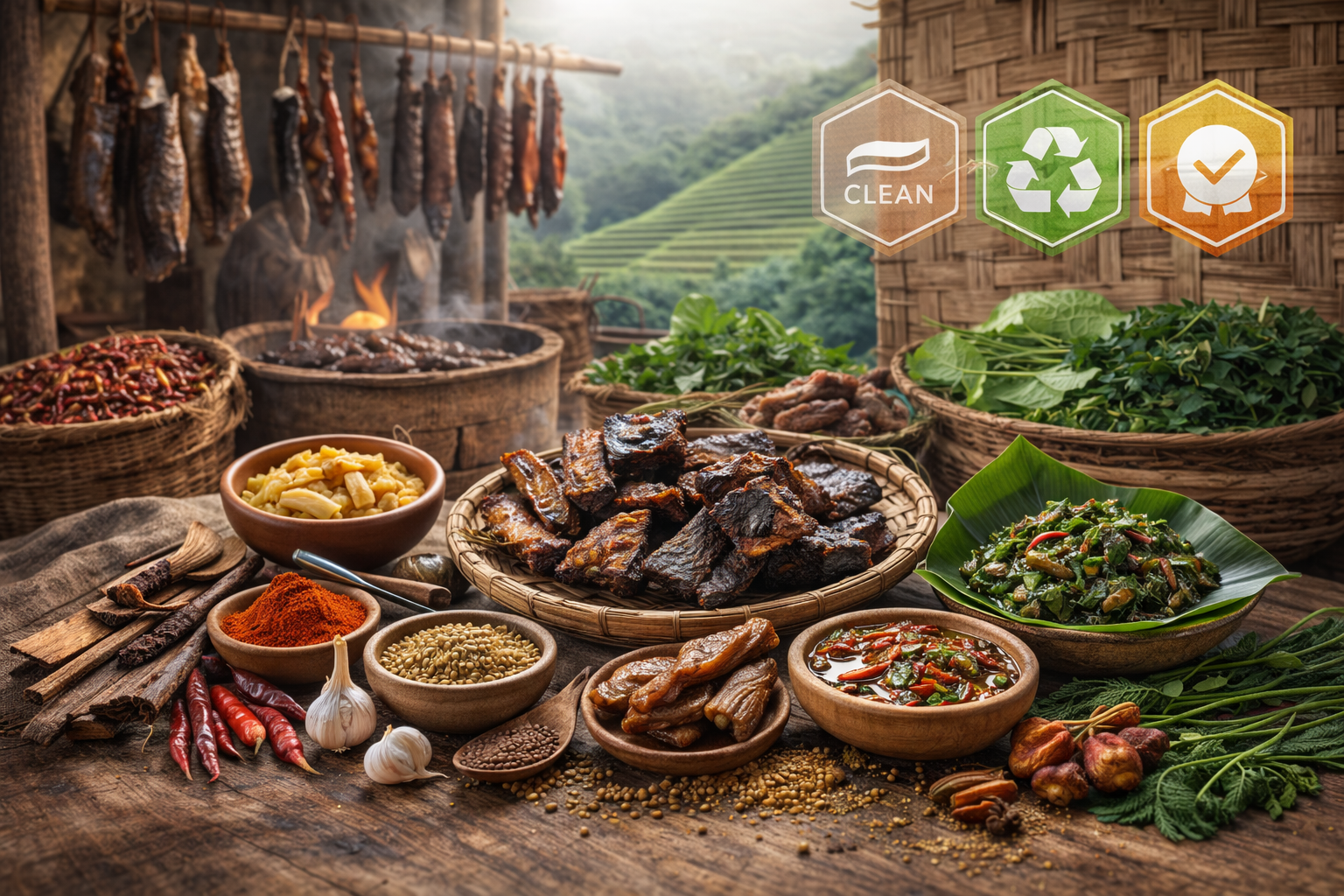
Northeast India’s Culinary Heritage and Its Relevance to Modern FMCG
The food culture of Northeast India is built on balance, restraint, and respect for ingredients. Long before clean-label products and sustainability became global marketing themes, communities in the region practiced food systems rooted in practicality and environmental awareness.
Today, these traditional principles carry strong relevance for modern FMCG brands.
Ingredient Integrity as a Foundation
Northeast cuisine emphasizes freshness and minimal intervention. Ingredients are chosen for their natural character rather than masked with excessive seasoning or artificial enhancement.
Fermentation, smoking, sun-drying, and careful spice blending developed as preservation techniques suited to geography and climate. These methods were systems designed for longevity, safety, and flavor retention.
Modern consumers increasingly value:
- Clean labels
- Transparent sourcing
- Minimal additives
- Authentic taste profiles
The culinary philosophy of the region aligns naturally with these expectations.
Simplicity Over Excess
Unlike heavily processed food systems, traditional Northeast cooking respects balance. Flavor profiles are structured but not overwhelming. The focus remains on allowing primary ingredients to retain identity.
In an FMCG context, this philosophy encourages disciplined formulation and discourages unnecessary complexity.
Products built on clarity tend to sustain long-term consumer trust.
Sustainability as a Natural Practice
Sustainability in the region historically emerged from necessity. Communities relied on local sourcing, seasonal produce, and preservation methods that reduced waste.
These practices mirror modern supply chain priorities:
- Reduced processing intensity
- Efficient use of raw materials
- Lower dependency on artificial stabilizers
- Stronger connection between producer and consumer
For contemporary brands, these values translate into structured sourcing policies and responsible growth strategies.
Translating Heritage into Retail Systems
While tradition offers direction, modern FMCG demands structure.
Retail markets require:
- Regulatory compliance
- Standardized packaging
- Defined quality parameters
- Consistent product performance
The challenge lies in preserving authenticity while operating within disciplined systems.
Heritage without structure limits scalability. Structure without authenticity weakens differentiation.
When both are integrated, brands achieve credibility.
Global Relevance of Regional Identity
Global markets increasingly seek differentiated flavors and authentic culinary narratives. Northeast India’s food heritage offers a unique identity grounded in balance and integrity.
For FMCG brands, regional inspiration can become a strategic asset when supported by compliance-driven execution and scalable distribution systems.
A Direction for Modern Brands
Modern FMCG is evolving toward transparency, sustainability, and consumer trust.
By interpreting traditional values through disciplined sourcing, standardized processing, and retail-ready systems, brands can bridge heritage and scale.
Authenticity and structure are not opposites. When aligned, they create long-term relevance in an increasingly competitive marketplace.