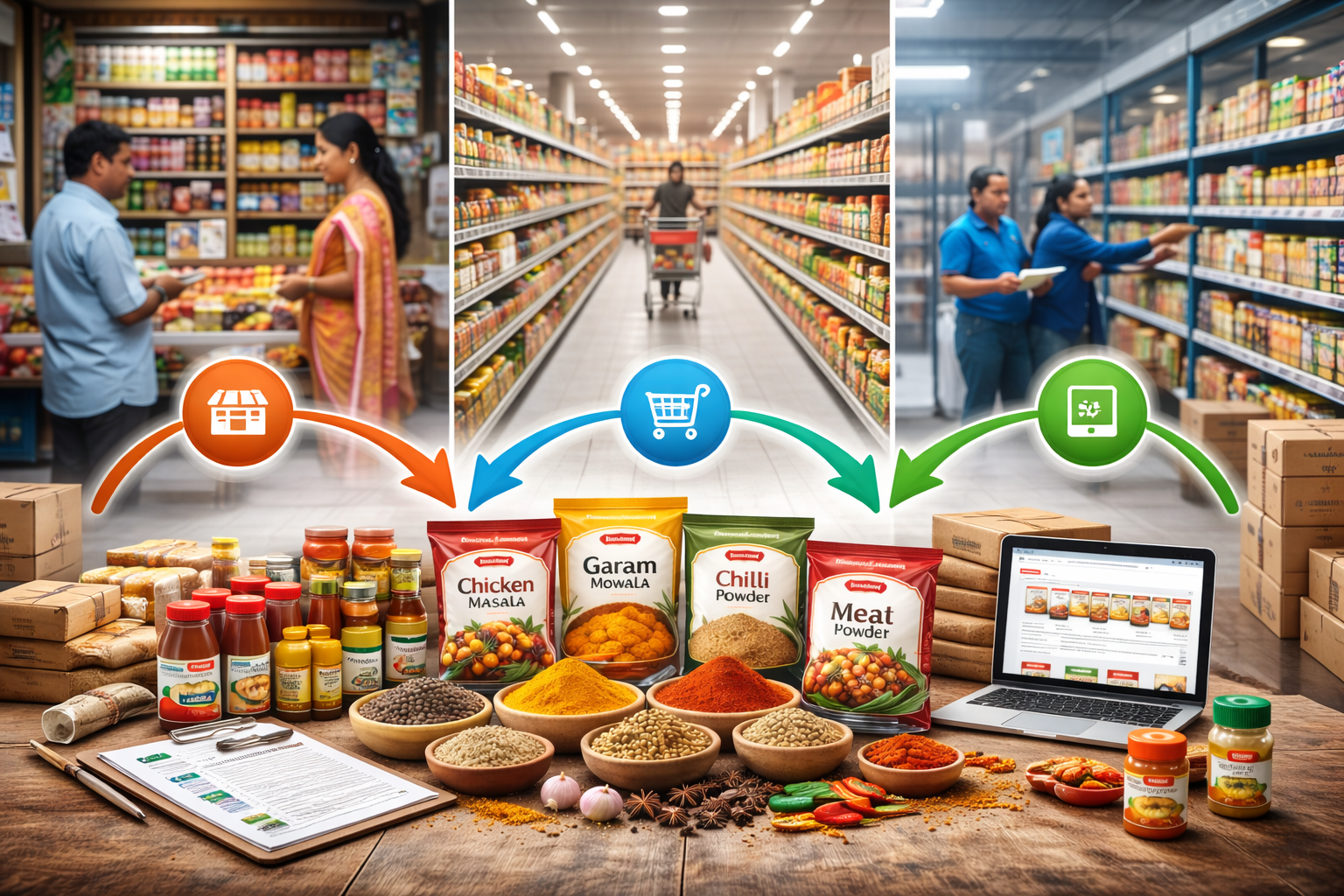
The Growing Importance of Multi-Channel Distribution in Modern FMCG
The way consumers purchase food products has fundamentally changed over the past decade. Traditional trade remains strong, but it no longer operates in isolation. Modern retail chains, digital marketplaces, and direct-to-consumer platforms have reshaped the structure of distribution.
For FMCG companies, multi-channel distribution is no longer a strategy. It is an operating requirement.
The Evolution of Consumer Access
Historically, distribution in the food sector relied heavily on wholesale networks and neighborhood retailers. These channels built deep local penetration and strong community relationships.
Today, consumer access is fragmented across multiple touchpoints:
- Kirana stores
- Organized retail chains
- Online marketplaces
- Brand-owned e-commerce platforms
Each channel serves a different consumer behavior pattern. Ignoring any one of them limits market relevance.
A single-channel approach restricts growth. A multi-channel system builds resilience.
Traditional Trade: Depth and Penetration
Traditional trade continues to be the backbone of regional FMCG markets.
Kirana stores provide:
- Hyper-local accessibility
- High-frequency purchase behavior
- Strong retailer-consumer relationships
Distributor-led networks enable last-mile reach and consistent replenishment. For many regions, traditional trade accounts for the majority of product movement.
However, reliance solely on this channel exposes brands to structural limitations in scalability and data visibility.
Modern Retail: Structured Systems and Visibility
Modern retail introduces operational discipline into distribution.
Organized chains demand:
- Standardized packaging
- Barcode integration
- Defined supply cycles
- Predictable inventory management
In return, modern retail provides:
- Larger basket sizes
- Strong shelf visibility
- Brand positioning alongside national competitors
Participation in modern trade signals operational maturity.
E-Commerce and Direct-to-Consumer: Data and Agility
Digital commerce has altered consumer expectations.
Online platforms offer:
- Convenience
- Broader assortment access
- Transparent pricing
- Faster comparison
For brands, digital channels provide valuable insight into purchasing behavior, repeat rates, regional demand trends, and consumer feedback.
Direct-to-consumer platforms strengthen brand identity and allow closer engagement with end users.
Digital is not a replacement for traditional trade. It is an amplifier.
Integration Over Isolation
The true advantage of multi-channel distribution lies in integration.
When properly structured:
- Traditional trade provides depth
- Modern retail provides structure
- Digital channels provide intelligence
Together, they reduce dependence on any single ecosystem.
A well-integrated distribution model ensures alignment in inventory planning, logistics coordination, and pricing strategy across channels.
Risk Mitigation and Market Stability
Market disruptions, regulatory changes, and supply chain interruptions are realities in the FMCG sector.
A diversified distribution network reduces vulnerability. If one channel experiences slowdown, others can compensate. Geographic diversification further strengthens resilience.
Multi-channel capability becomes a form of risk management.
Enabling Scalable Growth
Growth in FMCG is not only about product development. It is about access.
A strong product without distribution depth remains limited. A strong distribution system multiplies brand impact.
Multi-channel distribution allows brands to expand regionally and nationally without structural bottlenecks.
Distribution is not merely logistics. It is a strategic function that determines brand visibility, consumer accessibility, and long-term stability.