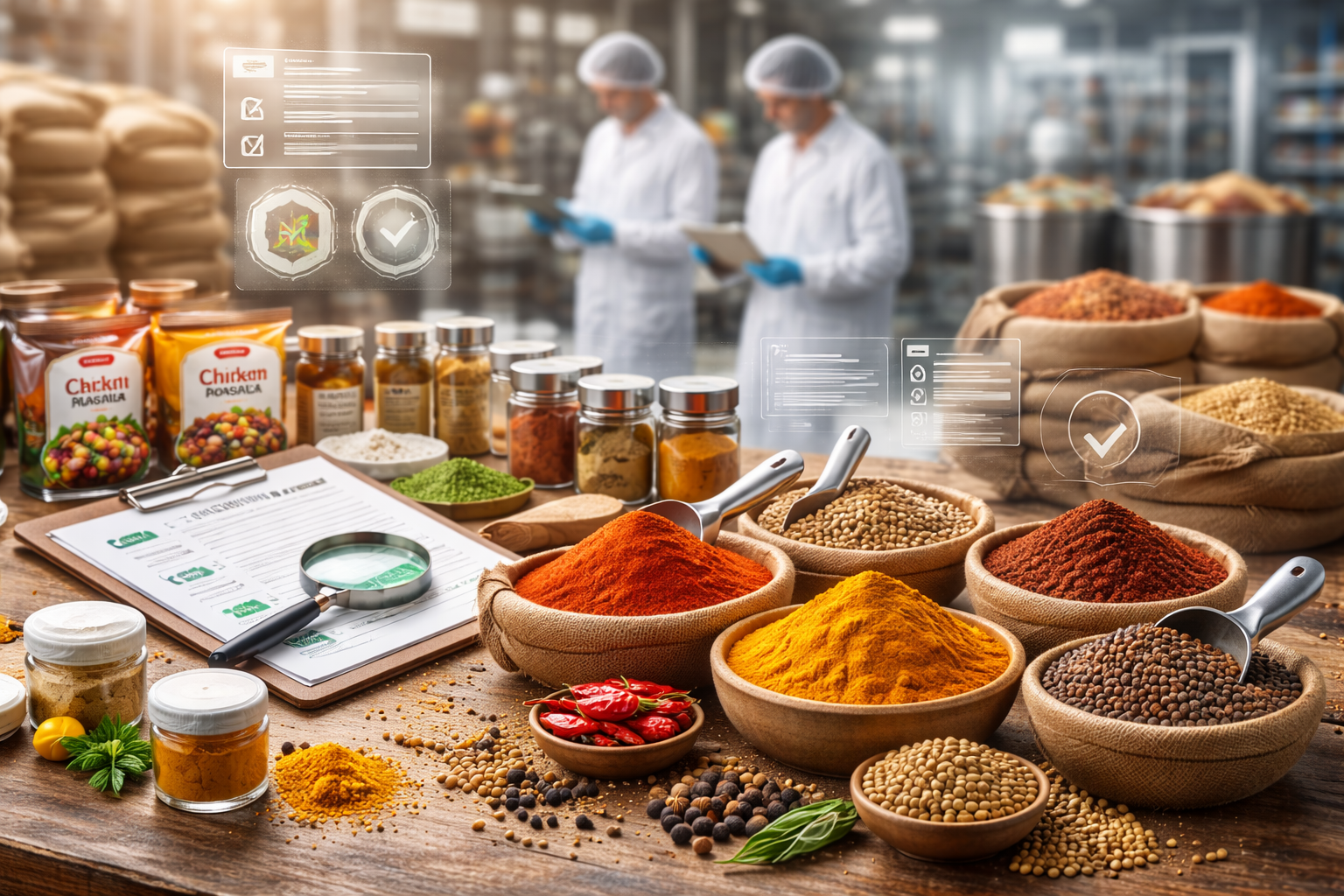
Why Standardization Matters in the Spice Industry
The spice industry operates at the intersection of agriculture, sensory science, and consumer trust. Unlike synthetic or highly controlled manufactured goods, spices originate from farms where variables such as climate, soil composition, harvesting methods, and storage conditions directly influence quality.
This inherent variability makes standardization not just important, but essential.
The Nature of Agricultural Variability
Spices are biological products. A batch of turmeric harvested during one season may differ in color value and curcumin content from the next. Chili powder can vary in pungency depending on the crop cycle. Even black pepper can fluctuate in essential oil concentration.
Without defined standards, this variability translates into inconsistent flavor, aroma, texture, and appearance. For consumers, inconsistency erodes trust. For retailers, it creates risk. For brands, it damages reputation.
Standardization provides the framework that transforms variability into reliability.
Defining Quality Parameters
Standardization begins with raw material specifications.
Every incoming batch must meet predefined benchmarks, which may include:
- Moisture content
- Volatile oil levels
- Color index
- Microbiological limits
- Foreign matter tolerance
Clear specifications create clarity across the supply chain. Suppliers understand expectations. Procurement teams can make objective evaluations. Quality control processes become measurable rather than subjective.
Controlled Processing and Blending
Processing plays a decisive role in maintaining spice integrity.
Grinding temperature, particle size uniformity, and exposure to oxygen influence aroma retention and color stability. Excessive heat during grinding may reduce essential oil content. Inconsistent blending may result in uneven flavor distribution.
Standardized blending protocols ensure that formulations remain consistent regardless of batch size. Defined process controls reduce variability introduced during manufacturing.
When properly executed, these systems enable scale without compromising sensory quality.
Regulatory Compliance and Food Safety
Modern spice brands operate in an environment of increasing regulatory scrutiny.
Domestic and international markets require strict compliance with food safety norms, labeling standards, and contamination limits. Microbiological control, allergen management, and traceability systems are no longer optional.
Standardization strengthens compliance readiness. Documentation, batch traceability, and defined control points reduce operational risk and improve audit preparedness.
Retail Expectations and Brand Reputation
Retail environments demand predictability.
Large retail chains operate on structured procurement systems. They expect uniform packaging dimensions, barcode consistency, shelf stability, and product reliability. Any deviation can lead to supply disruption.
Consumers are even more demanding. A customer who purchases a spice blend expects the same taste profile every time. If aroma intensity fluctuates or color changes significantly, confidence declines.
Standardization protects brand equity. It ensures that every pack represents the same promise.
Enabling Scalable Growth
Growth requires repetition. Repetition requires systems.
Standardized processes allow production volumes to increase without losing quality control. They reduce dependency on individual expertise and replace intuition with documented protocols.
This transition from informal processes to structured systems marks the difference between small-scale trading operations and scalable FMCG enterprises.
Building Trust Through Consistency
At its core, standardization is about trust.
Trust between brand and consumer.
Trust between manufacturer and retailer.
Trust between supplier and procurement team.
In the spice industry, where flavor defines identity and quality defines loyalty, consistency becomes a strategic asset.
Consistency builds trust. Trust builds enduring brands.